Based on the survey results of graduates from economics and journalism-related programs conducted in November 2025.
1. Overview
Graduate outcome data at the Posts and Telecommunications Institute of Technology (PTIT) are collected through alumni surveys conducted after graduation to evaluate the effectiveness of academic programs and the extent to which graduates meet labor market requirements.
The survey results are used as a basis for educational quality improvement activities and are periodically updated.
2. Graduate Employment Rate
Survey results indicate that graduates have a high employability rate within a short period after graduation.
- Employment rate within 6–12 months after graduation: approximately 85%–95%
- Percentage of graduates working in jobs directly or closely related to their field of study: approximately 80%–95%
Remarks
- Most graduates obtain stable employment.
- Academic programs demonstrate strong alignment with labor market demands.
3. Employment Sectors
Graduates work across various sectors, reflecting the flexibility and applicability of PTIT academic programs:
- Information Technology and Digital Transformation
- E-Commerce and Digital Business
- Finance, Banking, and FinTech
- Marketing and Communications
- Manufacturing, service enterprises, and startups
Remarks
- Graduates demonstrate adaptability across multiple industries.
- Application-oriented programs such as E-Commerce and Marketing show high levels of career relevance.
4. Common Job Positions
Graduates take on a variety of professional positions, including:
- Business and administrative specialists
- Marketing and digital marketing officers
- E-Commerce specialists
- Data analysis and financial specialists
- Communications and digital content officers
5. Average Salary
Graduate income levels are competitive compared to the labor market.
- Common starting salary range: from 8 to 15 million VND per month
- High-performing graduates may earn from 15 to 20 million VND per month
Remarks
- Income levels increase according to experience and competencies.
- Technology and finance sectors tend to offer higher salary levels.
6. Relevance Between Employment and Field of Study
Survey results indicate that:
- Approximately 60%–70% of graduates work directly in their field of study
- Approximately 25%–30% work in related fields
- The proportion of graduates working in unrelated fields remains low
Remarks
- Academic programs demonstrate strong career orientation.
- Graduates possess flexible career transition capabilities.
7. Significance and Use of the Data
Graduate outcome data are used to:
- Evaluate the effectiveness of academic programs
- Adjust curriculum contents and teaching methods
- Strengthen collaboration with industry and enterprises
- Support career counseling and guidance activities
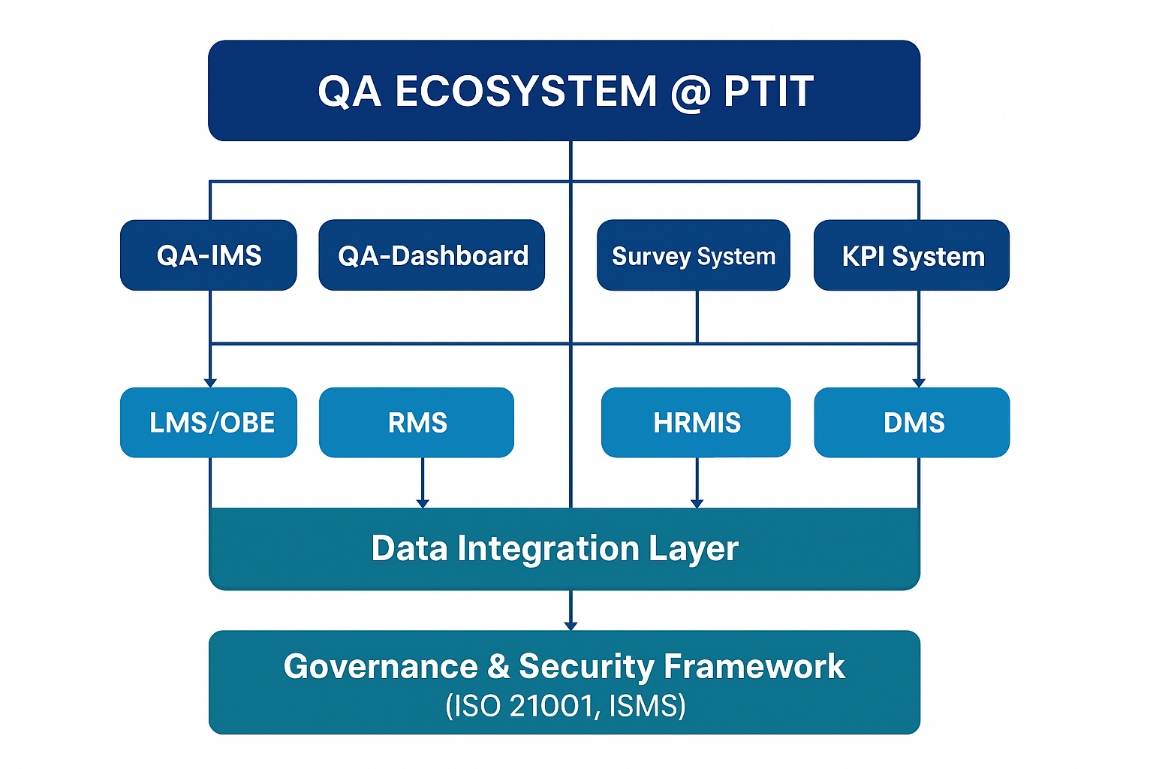
8. Linkage with the Quality Assurance System
Graduate outcome data are closely connected with the following QA activities:
- Stakeholder Feedback: primary source of data collection
- Data & Reports: publication and dissemination of detailed results
- Continuous Improvement: using data for quality enhancement
- Programme QA: implementation of improvement activities at the program level
9. Commitment
PTIT is committed to:
- Collecting and updating graduate outcome data periodically
- Ensuring the accuracy and transparency of the data
- Using data as a basis for continuous improvement